Ash dieback: Epidemiology, Spread and Mapping
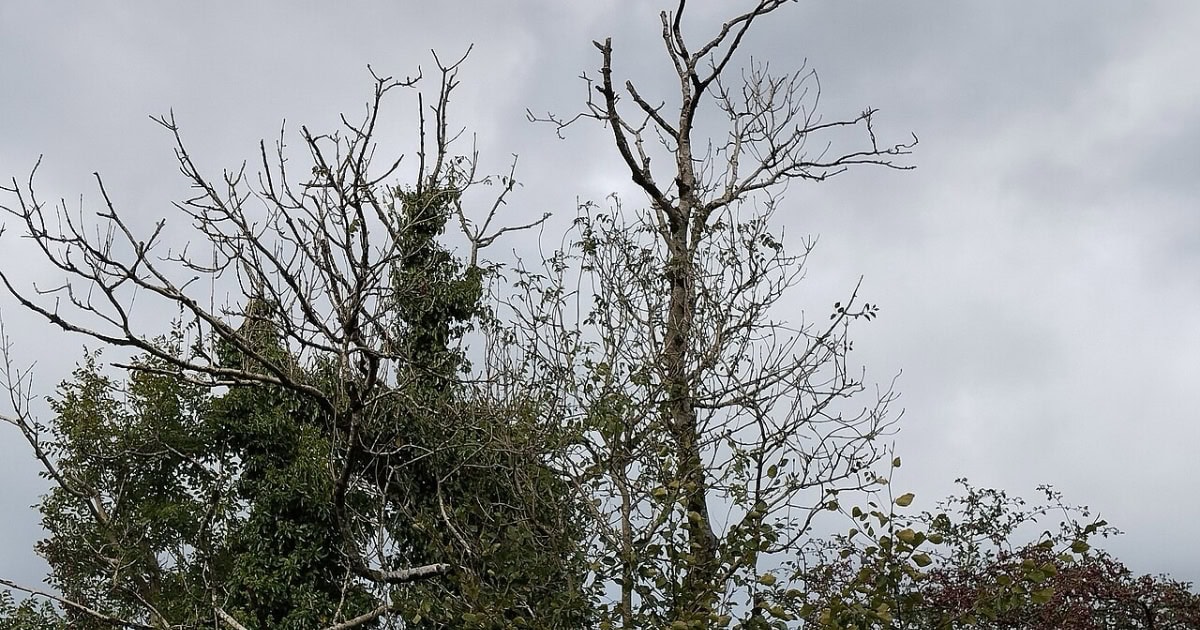

Ash dieback is caused by the fungus Hymenoscyphus fraxineus. Spores ride summer winds from tiny cup-like fruiting bodies on last year’s fallen leaves and leaf stalks. The disease also moves with traded plants, soil on boots and tyres, contaminated tools and vehicles, and—less often—barked firewood. In the North West, wet summers, roadside belts and clay soils can speed up visible decline. If a tree overhangs a road, play area, car park, access track or public right of way, book a professional survey—ideally one that uses the Tree Risk Assessment Qualification method. Forest Research Woodland Trust GOV.UK isa-arbor.com
What ash dieback is (and why timing matters) — Definition
Ash dieback is a fungal disease of ash caused by Hymenoscyphus fraxineus. It typically shows first as mid- to late-summer leaf blackening and shoot wilt, progressing to diamond-shaped lesions where leaf stalks meet twigs, and then crown dieback. The best time to inspect foliage is July to September; later, normal autumn colour can hide the signs. Forest Research+1
Practical line: If you want a quick check, schedule it between July and September.
How ash dieback spreads: wind, trade, people and kit
Wind (the main driver). In early to mid-summer, tiny cream cups called apothecia grow on last year’s fallen leaf stalks (rachises). They release spores that travel on humid, breezy days. Field studies estimate mean dispersal in the order of one to three kilometres from inoculum sources, while regional fronts can advance tens of kilometres per year across landscapes. Woodland Trust Oxford Academic BES Journals
Trade. Early outbreaks in Britain were linked to imported nursery stock. Plant health controls have since tightened, but movements of plants, saplings and certain materials still pose risks. If you are re-planting, choose locally appropriate stock and follow current government guidance. bspp.org.uk GOV.UK
People and kit. Mud and leaf litter can carry infected rachises. They cling to boot treads, mower decks, chipper bays and vehicle tyres on access tracks. A simple routine—brush off soil and litter, clean down tools and load beds, and sweep out before leaving site—reduces site-to-site jumps. Woodland Trust The Tree Council
Firewood and timber. The higher-risk pathway is barked material with adhered leaf debris. Keep firewood local, never dump rakings, and check your nation’s current guidance before moving material. Forest Research
Steps to limit spread (owner-friendly)
- Work dry and tidy: bag raked litter; brush off boots and tyres before you leave.
- Source plants locally and check supplier credentials.
- Keep barked waste on site where safe, or move under current guidance only.
- Plan major works outside the summer spore period where possible. Forest Research
Practical line: If you are running summer works on an access track or public right of way, add a simple brush-off station and sweep down vehicles before they re-enter the road network.
What ash dieback looks like: symptoms and stages (with ash dieback lookalike checks)
Early canopy signs (mid–late summer). Leaves develop dark patches, then wilt and blacken. Some stick on twigs. The outer crown begins to thin. July to September is the best window to see this clearly. Forest Research
Lesions and shoots. Look for sunken, diamond-shaped lesions where leaf stalks meet twigs and small branches. Peel a little bark at a lesion and the inner tissue looks brown-grey. Trees often respond by pushing out epicormic shoots lower on the trunk—the “pom-pom” effect many owners notice. Forest Research
Late-stage risks. In advanced cases, branches become brittle and failures can be sudden even while parts of the crown remain green. Basal and collar lesions can weaken the stem. Secondary infections, such as honey fungus, are common. If your tree overhangs a road, play area or path, that brittleness matters. GOV.UK
Ash dieback lookalike — quick rule-out. Drought, late frost, ash sawfly and anthracnose can also blacken leaves. Confirm by checking for diamond lesions at last year’s nodes and repeat your walk-round in July or August to compare. Pair this with photographs from the same viewpoint each summer.
Two specific checks you can try this week
- Take mid-July photos of the crown from two fixed spots and compare with last summer’s images for outward-to-inward thinning.
- On reachable branches, examine last year’s leaf-scar nodes for diamond-shaped lesions and brown-grey inner bark.
Practical line: If you can see thinning and lesions above a play area, car park or footpath, book a survey.
Epidemiology and mapping (North West patterns)
The fungus spends most of its year in the leaf litter. In cool, wet North West summers, apothecia on fallen rachises are abundant from roughly July into August, which raises local spore pressure. Clayey soils around Greater Manchester hold moisture and keep litter damp, and long roadside belts can show tip dieback earlier because wind exposure and traffic corridors funnel spores and stress crowns. That cocktail—wet summers, clay ground, roadside exposure—explains why one street may worsen faster than the next. (Those local factors reflect on-the-ground experience; the spore-timing and litter biology are well evidenced.) SpringerLink
Reading the maps.
- Chalara Viewer (TreeAlert): shows confirmed 10-kilometre grid squares across Great Britain. It is good for context but not the whole story. There is always reporting lag and under-reporting. treealert.forestresearch.gov.uk
- Owner tip: a square shaded on the map means confirmed presence, not how severe it is; unshaded does not guarantee absence. The Tree Council toolkit says exactly this—presence/absence only. The Tree Council
Remote detection. Research teams are testing airborne sensing and hyperspectral imagery to grade crown condition at scale, which could help future highway and utility surveys in Greater Manchester and beyond. arXiv
Practical line: If your site sits on a windy corridor or near the coast with exposure to Irish Sea weather, increase checks in July to September.
Inspection, decision-making and the Tree Risk Assessment Qualification
There is no single right answer for every ash. We weigh the tree’s condition against the targets beneath it—roads, garden seating, public rights of way, school routes—and we decide with you.
Retain and monitor
- Pros: Keeps shade, amenity and habitat; some ash show tolerance and can persist.
- Cons: Requires regular inspection; brittle limbs can fail without warning; access controls may be needed near paths or play areas. GOV.UK
Reduce risk without removal
- Pros: Prune or remove the highest-risk parts over paths, play areas and parking; re-route access; add signage.
- Cons: Follow-up visits are essential, and not every tree is suitable if basal lesions are present.
Remove and replace (last resort)
- Pros: Removes unmanaged risk and enables replanting with a diverse mix.
- Cons: Cost, ecological impact, and traffic management for roadside work.
Why ask for a Tree Risk Assessment Qualification inspection?
A Tree Risk Assessment Qualification assessment applies a standard, structured method to estimate likelihood of failure and the consequences, using the specific targets on your site. It gives owners defensible, clear next steps. If your ash overhangs a road, access track or public right of way, ask for an arborist with the Tree Risk Assessment Qualification. isa-arbor.com
Practical line: If your tree targets people or vehicles, commission a Tree Risk Assessment Qualification-based inspection rather than a quick look-over.
Grounded vignettes from the North West
A roadside tree in Swinton, Salford.
On a damp August morning, a semi-mature ash shaded a narrow pavement and parking bay. From the kerb it still looked green. Up close, diamond lesions ringed two- to three-centimetre laterals and a collar lesion crept in from the north side. We removed two compromised laterals to keep the footway open, set a three-month inspection cycle through August, and reviewed before winter. A year on, it is holding, and the pavement stayed open.
A farm track near Wigan.
A line of ash along an access track slumped after the wet 2024 summer. Several stems had basal lesions and honey fungus. We phased removals near the gate, retained two mid-crown-green trees away from the track for habitat value, and added a clean-down for vehicles leaving the site. It was simple, low-cost hygiene that stopped the problem stepping into the yard.
Practical line: If you run farm traffic under ash in summer, add a brush-off or wash-down point at the gate.
Hygiene and timing on real sites (gardens, paths, roadside belts)
- Boots, tools and vehicles: brush or blow off soil and leaf fragments; sweep load beds and chipper bays; do not export debris on tyres.
- Material handling: keep firewood local; avoid moving barked waste long distances; never tip rakings in hedges. Follow current national guidance before transport.
- When to work: where you can, plan heavy work outside the July–August spore period; if you must work then, tighten hygiene and consider temporary path diversions. Forest Research
Practical line: If summer pruning is unavoidable near a school route, pair it with robust clean-down and short-term diversion signage.
Local notes: Manchester and the wider North West
We see patterns here that shape decisions. Wet summers keep leaf litter damp and spore production high. Clay soils around Greater Manchester slow drainage and hold moisture. Roadside belts, rail corridors and coastal edges facing Irish Sea winds tend to show tip dieback early. In short: microclimate matters. We fold those cues into inspection intervals and work windows so you get proportionate, local decisions.
Practical line: If your ash sits on clay near a busy path, bring your mid-summer check forward rather than waiting for autumn.
Will any ash survive?
Some ash show tolerance and are worth retaining where risk allows. The policy guidance encourages safe retention of such candidates to sustain treescape benefits. New research also points to evolving resistance in younger generations, although that is not a free pass to ignore risk. Retain the right trees safely, and manage the wrong ones decisively. GOV.UK Queen Mary University of London
Practical line: If a tolerated ash does not overhang targets, keep it under regular review rather than rushing to remove.
Costs and permissions in the North West (guide only)
- Survey costs: a single-tree garden inspection in Greater Manchester often falls in the one-to-few-hundred-pounds range, while roadside lines of trees cost more due to traffic management.
- Permissions: felling licences may apply; there are limited exemptions for dead trees and immediate dangers. Tree Preservation Orders and Conservation Areas still require consent. Contact your local authority before works. GOV.UK
Practical line: If your tree might be protected, ask us to check the status and prepare the application before booking contractors.
Your next steps
- If you manage a roadside belt, public right of way, school route or play area beneath ash, book an inspection.
- Ask for a Tree Risk Assessment Qualification-based risk assessment if the tree targets people or vehicles.
- Start a simple photo log in July and August so decisions are based on change over time, not a single glance.
Call to action
Based in Manchester or anywhere in the North West?
We inspect ash across gardens, farms, parks and roadside belts, then set out clear, proportionate actions—from retain-and-monitor to staged removals—using the Tree Risk Assessment Qualification method where risk is the concern.
Book an ash survey with Tree Surveys North West and include your postcode, a brief note on targets beneath the tree (road, play, access track) and two mid-summer photos.
FAQs
What does ash dieback look like?
Mid-summer leaf blackening and wilting, diamond-shaped lesions on twigs and small branches, and a thinning crown with low “pom-pom” shoots. Check in July to September for best contrast. Forest Research+1
How far does it spread on the wind?
Spores typically disperse around one to three kilometres from infected leaf litter, with disease fronts advancing tens of kilometres per year at landscape scale. Oxford Academic BES Journals
Can I move firewood?
Keep it local and avoid moving barked waste long distances. Follow current national guidance before transport. Forest Research
Do I need a Tree Risk Assessment Qualification assessment?
Yes if the tree targets roads, play, footpaths or car parks. The Tree Risk Assessment Qualification method gives you a structured, defensible decision. isa-arbor.com
Are tolerant ash worth keeping?
Where risk is low, yes. Guidance supports safe retention, and emerging research suggests younger ash populations are showing signs of evolving resistance. Manage risk while preserving value. GOV.UK Queen Mary University of London
References
- Forest Research — Ash dieback overview, symptoms, inspection timing; Chalara Manual images. Forest Research+1
- UK Government / Forestry Commission — Managing ash dieback in England; permissions and responsibilities. GOV.UK
- Tree Council — Owner guidance and toolkit; mapping caveats and practical steps. The Tree Council+1
- Observatree — Field guide to apothecia on rachises; public information page. Woodland Trust+1
- Peer-reviewed research — Spore dispersal ranges and meteorology of spore release. Oxford Academic BES Journals SpringerLink
- ISA — Tree Risk Assessment Qualification: what it is and why it matters. isa-arbor.com
Kew / Queen Mary University — 2025 update on evolving resistance in British ash populations. Queen Mary University of London
Book in your tree survey today
Get clear, professional advice from qualified tree surveyors you can trust. Whether you need a report for planning, insurance, mortgages or safety, we’ll deliver accurate results fast.