
Ash dieback: epidemiology, spread and mapping for North West farmland

Definition
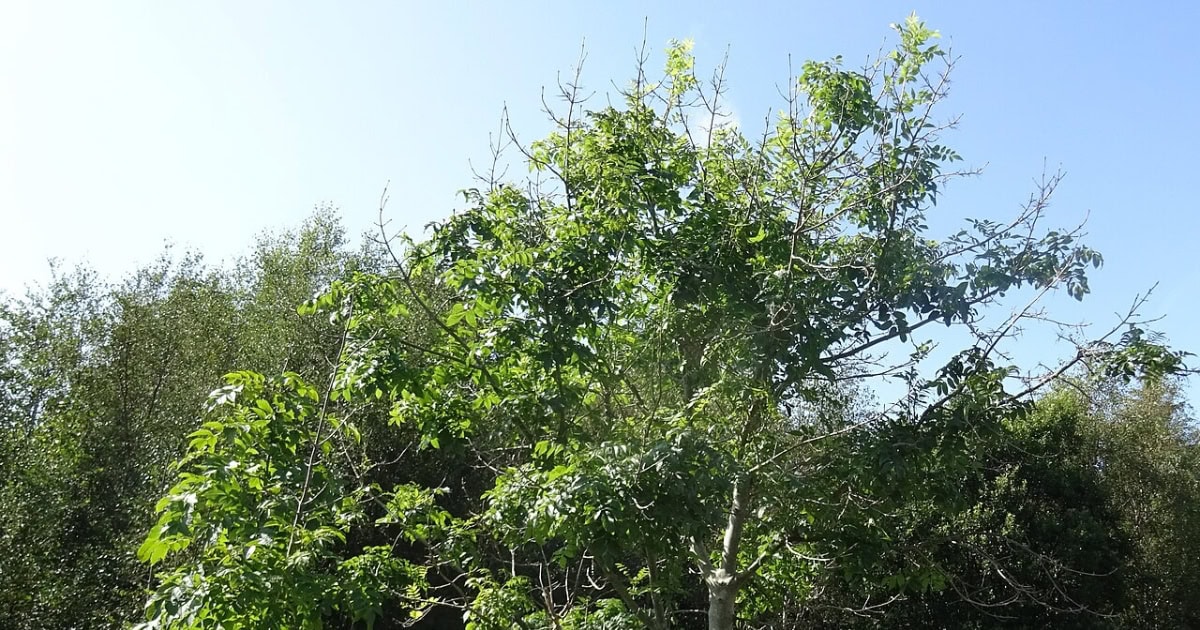
Ash dieback is a fungal disease of European ash caused by Hymenoscyphus fraxineus. It releases airborne spores from infected leaf stalks in summer, infecting leaves and shoots, and over time causes crown dieback and structural weakness. There is no cure; management aims to reduce risk and retain tolerant trees where safe (Forest Research, 2025). Forest Research
You see it across the North West now. Roadside belts thinning. Lone hedgerow trees failing to leaf-up. Timber turning brittle over public rights of way. The question for farm and estate owners is simple: which trees are safe to keep, which need works, and how do you prioritise across hundreds of boundaries and tracks?
We’ll show you how—rooted in current science and field practice.
The epidemiology of ash dieback in the United Kingdom
The fungus overwinters in leaf litter, especially last year’s ash leaf stalks. From roughly July to October, small cup-like fruiting bodies release vast numbers of spores that ride the wind (Forest Research; Woodland Trust). Spores infect through leaf surfaces, move into twigs, then bark and sapwood. In young trees, decline can be rapid; in mature trees, dieback can take years and often combines with secondary decay fungi. Forest Research+1
Two spread facts matter on farms:
- Height and distance. Spores are detected up to 48 metres above ground—high enough to clear hedges and buildings—and modelling shows spread over kilometres, not just fields (Dvořák et al., 2023; Grosdidier et al., 2018). ScienceDirect+1
- Background pressure. Regional maps confirm widespread presence; think of it as a seasonal spore rain rather than a single source. That is why isolated parkland ash still succumb (Forest Research distribution; FERA Chalara Viewer). Forest Research+1
There is cautious good news. Tolerant ash exist, and carefully retaining structurally safe candidates supports long-term recovery. Current United Kingdom trials and genomic work indicate natural selection is increasing resistance in some stands (Living Ash Project; QMUL 2025). Living Ash Project+1
If you manage hedgerows or parkland, plan for sustained pressure. Treat it as a long wave with peaks in warm, wet summers—common in our region.
Spread on farms and estates: exposure patterns in hedgerows, shelterbelts and lone trees
In the North West we often find the earliest obvious decline in exposed trees: hedgerow standards, shelterbelts along lanes, and lone parkland ash. Why? Wind corridors accelerate spore delivery, coastal exposure increases mechanical stress, and our wet summers keep canopies humid. On clay soils—common around south Manchester and parts of Cheshire—roots suffer periodic waterlogging, compounding stress. Machinery passes and livestock loafing spots add compaction and wounding risk near gateways and troughs. National Highways’ current North West programme echoes the scale of roadside ash risk across the region. nationalhighways.co.uk
Pros / cons of retention vs removal in farm settings
- Retain (pros): Keeps shade and shelter; maintains genetics that might be tolerant; avoids sudden habitat loss; spreads cost over time.
- Retain (cons): Ongoing inspection cost; brittle limbs over tracks and rights of way; potential for sudden structural failure.
- Remove (pros): Immediate risk reduction at high-use points; simplifies hedge replanting.
- Remove (cons): Up-front cost; traffic management; habitat shock; may remove potentially tolerant individuals (Bartlett technical guidance). bartlett.com
Ash dieback lookalike note: In early summer, anthracnose or late frost can mimic leaf blackening. Confirm by looking for the classic diamond-shaped lesions at branch unions later in the season (Tree Council; Observatree). The Tree Council
Practical line: If decline sits above a lane or public footpath, book a survey.
Ash dieback symptoms — what does it look like on farmland trees?
Leaves and shoots (mid–late summer): Dark patches on leaves that wilt and blacken; dead shoots held among green foliage. The top of the crown thins first (Woodland Trust; RHS). Woodland Trust+1
Stems and branches: Diamond-shaped lesions at or just below the point where a twig meets the stem; bark beneath turns brown-grey. Expect brittle, dead tips aloft in mature crowns (Observatree; Forest Research). Woodland Trust+1
Basal symptoms: On some trees, dark basal lesions appear even when the crown looks reasonable—do not ignore these (Tree Council). The Tree Council
Two checks you can try today (owner-friendly and verifiable):
- Compare crown photos from the last two summers at the same week—if leader dieback has advanced by one rung of scaffold branches, escalate.
- Look for diamond lesions exactly at last year’s twig nodes on sun-exposed sides.
Ash dieback lookalike note: Drought or waterlogging can also thin crowns; honey fungus can cause patchy dieback and bark plates. If lesions are absent and decline is asymmetric, get a professional inspection. Ash Dieback in Devon
Practical line: If you see dead tips over a play area or yard, book a survey.
Disease stages and how to prioritise works
Think in stages you can spot:
- Early canopy flagging: scattered shoot death; few lesions visible. Inspect quarterly; no major works unless directly over paths or roads.
- Advancing dieback: 30–50% crown loss; lesions common; first dead limbs. Target reductions or staged removal where risk intersects with people or vehicles.
- Structural risk phase: Dead scaffold branches, basal lesions, secondary decay—brittle failures likely in wind. Prioritise works near highways, yards, PROW, field margins by schools or bus stops (Gov.uk; Tree Council). GOV.UK+1
Timing: Many farms plan heavier works after harvest or in winter to manage ground pressure and traffic management costs. Wet autumns on clay can limit access—build that into schedules.
Practical line: If the crown loss exceeds about half and there is target occupancy beneath, plan works.
Mapping and triage: a simple farm-scale method
You do not need exotic software. A risk-led map allows you to spend money where it truly matters.
Layers to include:
- Public rights of way and permissive paths
- Public and private roads, farm lanes and access tracks
- Yards, houses, schools, play areas, stock handling points
- Overhead lines, pipelines, watercourses and culverts
- Hedgerows and shelterbelts; lone parkland trees
- Historic photos (last two summers) and today’s photo-points
Pull national distribution for context and set “red zones” where your trees overhang high-use routes (Forest Research map; FERA Viewer). Forest Research+1
Steps (you can do this in a day):
- Export or sketch your routes (roads, tracks, rights of way).
- Walk or drive photo-points every 200–300 metres; label trees in plain English (e.g., “NE gate ash”).
- Mark crown condition bands (roughly: <25%, 25–50%, >50% loss).
- Add hazards: dead tops, basal lesions, lean toward target, old limb failures.
- Heat-map the risk by target use: highway > farmyard > field edge > interior.
- Set a works list by quarter, with “inspect again” flags for retained candidates.
Practical line: If a dead limb sits over a bus route, bring it forward.
Management on working land: retention, replanting and the law
- Licences: In England, you generally need a felling licence to remove diseased ash unless the tree is genuinely dangerous or dead. The dangerous tree exception exists for prevention of immediate danger, but it is for exceptional cases—keep evidence (photos, notes) (Gov.uk; Operations Note 46a; Tree Council). GOV.UK+2GOV.UK+2
- TPOs and conservation areas: Tree Preservation Orders and conservation area rules still apply—check before works. GOV.UK
- Roadside and PROW costs: In England there is grant support within the Tree Health Pilot for managing dangerous roadside ash and associated road closures—helpful where lane closures would otherwise be a barrier (Gov.uk grants). GOV.UK+1
- Retention of candidates: Where a mature ash is structurally sound, retaining it under monitoring helps preserve potential tolerance. Removal purely on infection status is not recommended when structure is sound and targets are low (Bartlett; Living Ash Project). bartlett.com+1
- Replacement and resilience: Replant mixed, locally suitable species to spread risk. In exposed coastal strips, choose species tolerant of wind and salt drift; on heavy clays near Manchester, avoid species that hate prolonged waterlogging (RHS; Thomas 2016 background on ash ecology). rhs.org.uk+1
Practical line: If a tree is near a lane and clearly dangerous, document, make safe, then complete the licence process as advised.
Two short vignettes from recent North West work
Smallholding near Ormskirk (clay, windy lane): A hedgerow standard ash over a narrow access track showed 40% crown loss and two diamond lesions at major unions. We section-felled the lane-side scaffold limb under a short road closure, retained the stem with a light reduction, and set quarterly inspections. The owner replanted gaps with field maple and small-leaved lime.
Dairy farm south of Preston (wet summers, PROW through grazing): A line of five ash shaded a public right of way and a water trough. Two had basal lesions and dead tops over the path. We prioritised those for removal under a weekend closure, retained three for monitoring, and mapped a spring replanting strip with mixed native species to maintain shelter.
TL;DR
- Spores travel far and high; every farm is exposed. ScienceDirect+1
- Map targets first: highways, yards, rights of way.
- Retain structurally safe trees where they may be tolerant; remove or reduce where risk is real. Living Ash Project
- Check licensing and TPOs; use available grants for roadside closures. GOV.UK+1
- Two quick owner checks: compare summer photos year-on-year; look for diamond lesions at last year’s twig nodes. Woodland Trust
Call to action
If you farm or manage land in Greater Manchester, Lancashire, Cheshire or Merseyside, we can build a farm-scale ash dieback map, prioritise works, and handle liaison on road or path closures. Book a site survey with Tree Surveys North West and we will get you a practical, staged plan that keeps people safe and your treescape resilient.
References (selected)
Forest Research (2025); Woodland Trust (n.d.); RHS (n.d.); Observatree (n.d.); Gov.uk Operations Note 46a (2019); Gov.uk Managing ash dieback (2021); Tree Council Guide (2020); Grosdidier et al. 2018 FEMS Microbiol Ecol; Dvořák et al. 2023; Living Ash Project (2024 update); QMUL (2025); Bartlett Technical Report. bartlett.com+11Forest Research+11Woodland Trust+11
Book in your tree survey today
Get clear, professional advice from qualified tree surveyors you can trust. Whether you need a report for planning, insurance, mortgages or safety, we’ll deliver accurate results fast.