
Ash dieback: how to find and protect tolerant regeneration in North West woodlands
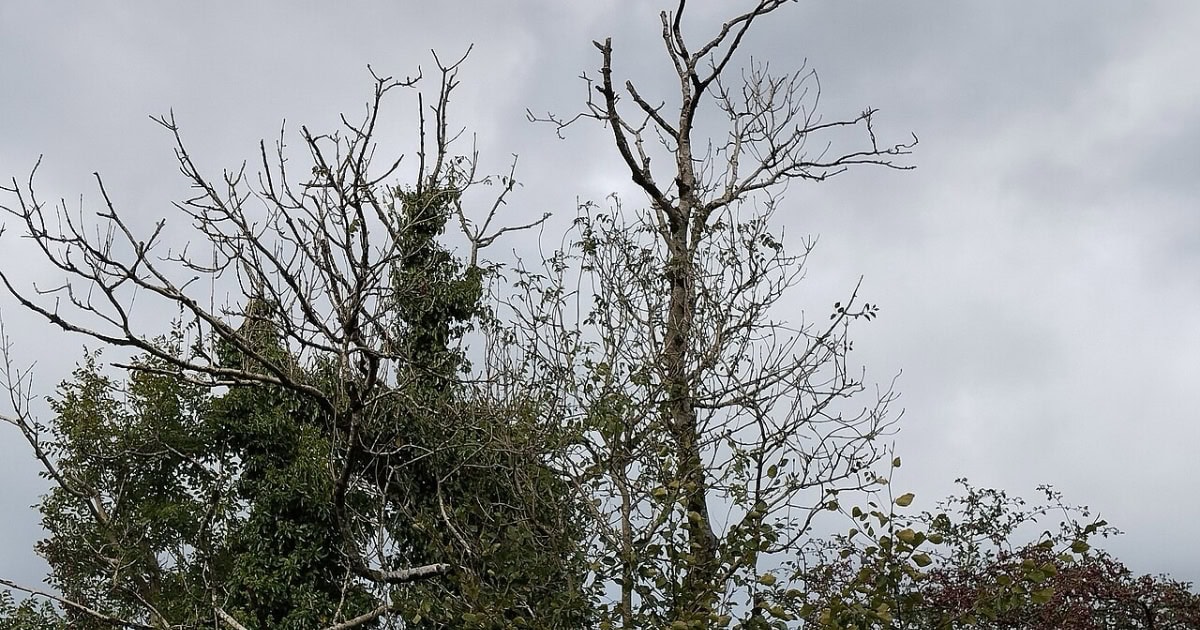

Managing ash in woodlands (silviculture): retaining tolerant regeneration — how to find it and protect it
TL;DR
Some young ash are coping better than expected with ash dieback. In the North West, you can find promising regeneration by watching crown trends over two summers and checking for the classic diamond lesions at last year’s nodes. Keep the best, protect them from browsing and competition, and manage safety along roads, access tracks and Public Rights of Way with proportionate works. Recent research from Royal Botanic Gardens, Kew and Queen Mary University of London shows natural selection is already nudging wild British ash toward greater tolerance. Kew Gardens+2Queen Mary University of London+2
Ash dieback is the hard story owners already know. But there is a second story worth hearing. In several British woodlands the new cohort of ash saplings is showing signs of genetic tolerance. That changes how you manage your woodland today: not a blanket felling response, but a selective, safety-led approach that keeps the best seedlings for tomorrow. (Royal Botanic Gardens, Kew; Queen Mary University of London; Science). Kew Gardens+2Queen Mary University of London+2
Definition
Ash dieback is a fungal disease caused by Hymenoscyphus fraxineus. Typical signs include blackening of leaves and shoots in summer, diamond-shaped lesions where side branches meet the stem, and a thinning crown often followed by epicormic shoots lower down. It is widespread across the United Kingdom. (Forest Research; Woodland Trust). Forest Research+1
Managing ash in woodlands: why retaining tolerant regeneration matters (ash dieback)
There is now strong, recent evidence that naturally regenerated ash can be more tolerant than the previous generation. Scientists from Royal Botanic Gardens, Kew and Queen Mary University of London compared older trees with juveniles that established after the disease arrived. They found small but significant shifts across thousands of genetic markers, consistent with natural selection favouring more tolerant individuals. In plain terms: if you keep the right parents and protect the best youngsters, you increase the chance of a future ash component in your woodland. (Royal Botanic Gardens, Kew; Queen Mary University of London; Science). Kew Gardens+2Queen Mary University of London+2
The practical implication for the North West is straightforward. In wet summers on clay-rich soils (common around Greater Manchester and the Mersey corridor), we often find promising regeneration along ride edges, in small canopy gaps, and beneath seed trees that have kept fuller crowns. Coastal exposure around Wirral and Sefton can exaggerate dieback; in those places, compare sheltered hedgerow spots with open roadside belts before making decisions. (Forest Research leaflet). cdn.forestresearch.gov.uk
One-line action: If you see this pattern over a play area or car park, book a survey.
Symptoms, pictures and what does ash dieback look like? (ash dieback symptoms)
Leaves and shoots (summer): dark patches appear in summer; leaf stalks and midribs blacken; wilting follows and leaves may drop early. Lesions: look for diamond-shaped, dark lesions where side branches meet the stem; the inner bark beneath is brownish-grey. Crown response: dieback from the tips; epicormic shoots lower down as the tree attempts to replace lost crown. (Woodland Trust; Bartlett Tree Experts). Woodland Trust+1
Ash dieback lookalike: spring anthracnose can also blacken leaves and mimic early symptoms. Re-check in mid- to late summer and use lesions at last year’s nodes to confirm. (Bartlett Tree Experts). bartlett.com
Two checks you can try this month
- Compare photos of the same saplings from the last two summers. A stable or improving crown is a positive sign. (Forest Research, synthesis). Forest Research
- Look for diamond-shaped lesions at last year’s nodes. Fewer lesions plus a steady crown is a good candidate for retention. (Woodland Trust; Bartlett Tree Experts). Woodland Trust+1
One-line action: If these symptoms are present along a roadside belt, book a survey.
Field steps to find tolerant ash regeneration (ash dieback disease stages)
You do not need a laboratory. You need a simple, repeatable field method and a little patience.
- Map likely parents. Mark seed-bearing ash with less than thirty per cent crown loss and few lesions.
- Tag a cohort. Within about twenty to forty metres of those parents, tag twenty to fifty saplings from half a metre to three metres tall.
- Photograph twice. Take the same angle each July. Then repeat next July. Compare crown fullness and tip dieback.
- Check last year’s nodes. In August, inspect the nodes on last year’s growth for diamond lesions. Minimal or absent is best.
- Score shoot dieback. Count dieback in the top whorl on a simple zero to three scale. Keep the zero and one scores.
- Cull and back the winners. Remove suppressing bramble and brash around the best thirty per cent; consider guards or short runs of fencing where browsing pressure is high.
This method mirrors how professional trials and breeding programmes rank candidates, but in a scaled-down, owner-friendly way. It aligns with national guidance that encourages maintaining genetic diversity and using natural regeneration where it is safe and sensible to do so. (Forest Research; Living Ash Project). Forest Research+1
One-line action: If any of these saplings stand directly above a Public Right of Way, book a survey.
Protecting what you keep (North West tactics that work)
Browsing control. Deer and rabbits erase gains fast. Use one-point-two metre tubes or mesh guards for singles; on higher-pressure sites in the Ribble Valley or Cheshire meres, short runs of fencing along rides can protect groups cost-effectively when paired with light halo thinning. (Tree Council owner guide). The Tree Council
Halo thinning and timing on clay. On heavy soils common around Manchester, time light thinning for late summer into early autumn when ground bearing improves. Release your best saplings from heavy, immediate shade rather than removing a wide swathe; it limits wind exposure and rutting. (Forest Research leaflet). cdn.forestresearch.gov.uk
Wind and salt near the coast. On Merseyside’s coastal belts, retain a mixed-species windward buffer. Reduce pressure gradually once retained saplings reach three to four metres and are well anchored. (Tree Council and local authority practice). The Tree Council+1
Access tracks and Public Rights of Way. Plan around the real-world risk: falling deadwood over tracks and paths. Where spacing is tight, consider staged reductions or removal of poor-condition ash, while protecting sound regeneration nearby. (Tree Council research workshops on Public Rights of Way). The Tree Council
One-line action: If stems lean over an access track you use daily, book a survey.
Safety, licences and when to intervene
Safety first. Declining ash can become brittle and unpredictable as the disease advances. Works near highways, schools and busy paths require proportionate risk control and competent contractors who understand ash behaviour. The Forest Industry Safety Accord provides specific guidance on felling dead or diseased ash. ukfisa.com+1
Felling licence, Tree Preservation Orders and designated sites. You will usually need a felling licence to remove diseased ash, unless the trees are dead or present a real and immediate danger. Always check for Tree Preservation Orders and for designations such as Sites of Special Scientific Interest, and speak with your local planning authority before works. (GOV.UK guidance). GOV.UK
Pros and cons of retaining tolerant regeneration
Pros
- Maintains genetic diversity and aligns with new evidence of evolving tolerance.
- Lower restocking costs where natural regeneration is strong.
- Supports ash-dependent biodiversity. (Kew; Queen Mary University of London; Forest Research). Kew Gardens+2Queen Mary University of London+2
Cons
- Monitoring effort over at least two summers.
- Uneven appearance as weak individuals fail.
- Requires browsing control and selective competition management. (Tree Council; Living Ash Project). The Tree Council+1
One-line action: If canopy decline is more than fifty per cent directly over a path, book a survey.
Two grounded vignettes from recent work
A drive-by line near the ring road, Greater Manchester.
Last July we reviewed a roadside shelterbelt with between forty and sixty per cent crown loss. Under the most depleted parent tree the only saplings were heavily infected. Under two fuller-crowned parents we found a run of clean saplings between one-point-eight and two-point-two metres. We tagged thirty, returned this July, and twenty-two held their crowns with only minor node lesions. Those twenty-two now have guards and a light halo thinning around them.
A clay site on the Bolton fringes with a busy Public Right of Way.
A farm woodland on heavy clay had wet summer ruts and a permissive path. Our decision was to remove three high-risk ash leaning toward the path, retain and protect fifteen clean saplings beneath a good parent, and underplant small groups of oak and field maple. We timed light thinning for late summer to avoid rutting and kept a wind buffer toward the open field. One year on, the retained saplings remain stable and unbrowsed.
Why this approach matters now
The best current evidence points to rapid, polygenic evolution in wild British ash. That does not mean inaction. It means the right action in the right places: keep and protect the winners, manage risk where people pass, and diversify where site objectives require it. (Royal Botanic Gardens, Kew; Queen Mary University of London; Science). Kew Gardens+2Queen Mary University of London+2
Clear next step for North West tree owners
If you own ash along roadsides, access tracks or Public Rights of Way in Greater Manchester, Cheshire, Lancashire or Merseyside, we can help. Book an ash dieback survey and we will map candidates for retention, set up simple monitoring, and make safe where needed in line with national guidance on felling licences and Tree Preservation Orders. (GOV.UK; Forest Research). GOV.UK+1
Sources and further reading
- Forest Research. Ash dieback (Hymenoscyphus fraxineus) and Managing Ash Dieback in England (official guidance and management leaflet). Forest Research+2Forest Research+2
- GOV.UK. Managing ash dieback in England and operations notes on safety and restocking. GOV.UK+2GOV.UK+2
- Royal Botanic Gardens, Kew; Queen Mary University of London; Science. British ash woodland is evolving resistance to ash dieback. Kew Gardens+2Queen Mary University of London+2
- Tree Council. Ash dieback: a guide for tree owners; Public Rights of Way workshop materials; 2025 toolkit. The Tree Council+2The Tree Council+2
- Bartlett Tree Experts (national firm). Chalara ash dieback technical report; symptom cues and lookalike notes. bartlett.com
- Living Ash Project / Future Trees Trust. Project overview and breeding progress. Future Trees Trust+1
Short disclaimer (England): This article is general guidance. Tree works can be hazardous and may require a felling licence or consent under Tree Preservation Orders and Sites of Special Scientific Interest rules. Seek site-specific advice from a qualified arboricultural professional and your local authority before works. (GOV.UK). GOV.UK
Book in your tree survey today
Get clear, professional advice from qualified tree surveyors you can trust. Whether you need a report for planning, insurance, mortgages or safety, we’ll deliver accurate results fast.