
Ash dieback identification and diagnosis: 12 photos every report should capture (and how to take them)

Definition
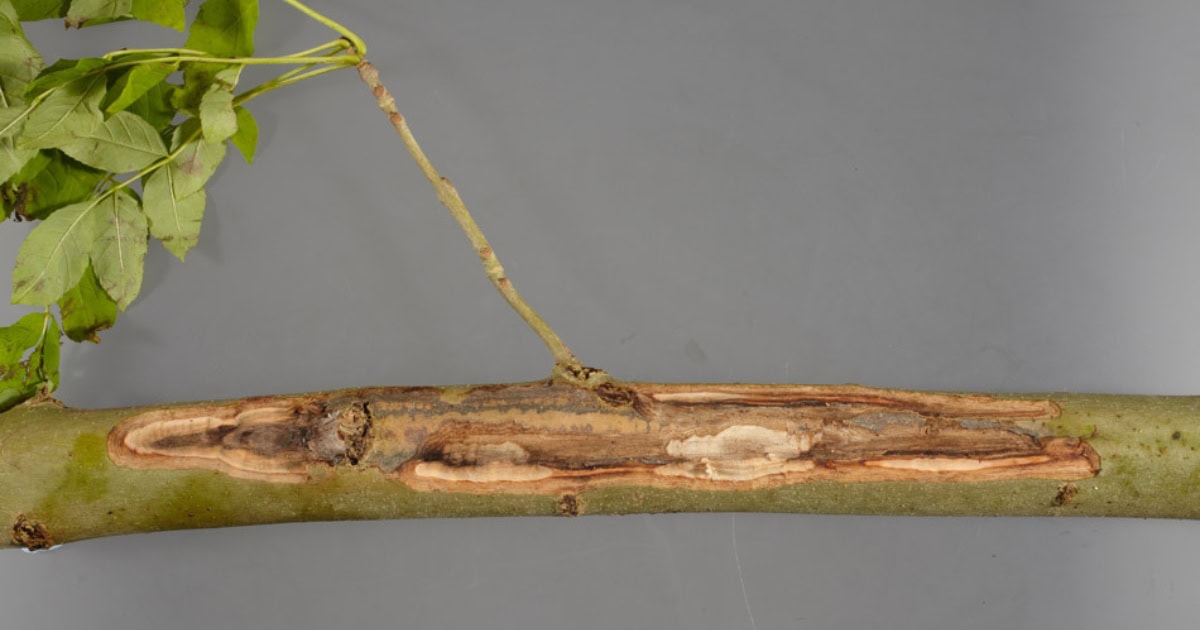
Ash dieback is a fungal disease of ash trees caused by Hymenoscyphus fraxineus. Typical signs include blackened, wilting shoots and leaf stalks in mid- to late-summer, diamond-shaped bark lesions at branch junctions, progressive crown thinning, and—in many cases—lesions at the base that can compromise stability. Forest Research
You want a clear way to recognise ash dieback and to record what you see so decisions are easier. This guide gives you both: a plain-English identification walkthrough and a 12-photo protocol you can follow on your drive or garden. We also explain how we apply the International Society of Arboriculture Tree Risk Assessment Qualification approach when advising on pruning, retention, or removal. ISA Arbor+1
Grounded vignette (Greater Manchester)
Last August, we were called to a small cul-de-sac near Monton. A mature roadside ash shaded parked cars and a school footpath. Top-down dieback was obvious, but the real story sat at the base: a long, sunken lesion, with white fungal fans beneath a loosened bark edge. The photographs—taken carefully—made the decision straightforward: reduce risk ahead of the September winds, retain habitat value where safe, and monitor the base annually with repeat photo-points. Findings like this align with research showing basal issues and secondary fungi can drive structural weakness even when the crown still looks passable. Forest ResearchScienceDirect
Symptoms, what it looks like, and the pictures that prove it (targets: ash dieback symptoms; what does ash dieback look like)
Leaves and shoots (best seen July to September in the United Kingdom).
Look for darkening and wilting of current-year shoots and leaf stalks. Affected leaflets often hang on, black and scorched at the tips. Photograph a hand-held twig against the sky, then a close-up where the leaf stalk meets the shoot. The timing matters: once autumn colour starts, you can mistake normal change for disease. Forest Research
Stems and branches.
Check for diamond-shaped lesions at side-branch junctions and along small laterals. Under the bark the tissue turns brown-grey rather than healthy green. Photograph at least one lesion with a ruler for scale, then step back for a mid-range shot that shows where it sits in the branch framework. Woodland Trust
Base and root collar.
In the North West we often find elongated, sunken lesions around the base. These areas are more vulnerable to invasion by honey fungus, which can undermine the roots and stem base and raise the likelihood of failure under wind load. Take a panoramic set around the base at eye level and, if safe and lawful, one close-up showing the inner bark colour at a lifted edge. Replace any loose bark gently. Forest ResearchScienceDirect
Crown and canopy.
Dieback usually starts in the upper crown. You may see finer twig death, sparse foliage in the top third, and tufts of new shoots lower down as the tree tries to compensate. Step well back and take a full-crown photograph with a fixed object (lamp column, building corner) in frame for scale. Woodland Trust
Ash dieback lookalike (and how to rule it out).
Spring anthracnose, late frost, or drought can blacken leaves. The simple test is timing: ash dieback foliage symptoms present in mid- to late-summer, not in April or May. If you are unsure, re-check and re-photograph the same shoots in July. Forest Research
If you see these signs over a driveway, parking bay, or school route, book a survey.
Typical disease progression and what to photograph each year (targets: ash dieback disease stages)
Progress often begins with shoot infection and patchy upper-crown dieback. Bark lesions appear at nodes and small unions. Many trees then develop basal lesions, which matter because they are frequently associated with root and stem decay fungi that reduce stability long before the whole crown looks dead. Your goal as an owner is a steady, repeatable record: photograph the same viewpoints each year so change is obvious and decisions are not guesswork. Forest ResearchScienceDirect
Use a simple log—date, weather, and vantage point—and keep your images named the same way each time. One good summer photo series is worth more than a dozen scattered snaps across seasons.
If the crown is thinning above a public footpath or play area, do not wait for autumn—book an inspection now.
The 12 photos every report should capture (and how to take them) (Steps box)
- Site context — From the road or access track, show the ash tree and the likely targets beneath: cars, footpaths, garden seating.
- Identity and location marker — Trunk with house number, lamp column, or Public Rights of Way fingerpost in frame so you can repeat the shot next year.
- Full-crown profile — Stand back fifteen to thirty metres; keep the horizon level; include a fixed object for scale.
- Upper crown detail — Zoom in on the thinnest quadrant; use the sky as a backdrop to show dead twigs and gaps.
- Representative shoot symptoms — Hand-held twig in July to September; focus where the leaf stalk meets the shoot; record one healthy twig for comparison. Forest Research
- Diamond lesion at a branch union — Close-up with a ruler or coin for scale; write down the compass aspect. Woodland Trust
- Stem tracking shot — Mid-range image from root flare to first main union; shows how many lesions are present.
- Basal overview — Four quarter-turn photos around the base at eye level; look for sunken areas and cracking. Forest Research
- Basal macro — If safe and lawful, lift a small, already-loose edge to show inner bark colour; never cut living tissue.
- Buttress roots and soil condition — Record clay shrinkage cracks, wheel ruts, or standing water after wet summers. These North West cues matter.
- Targets beneath the canopy — Benches, school routes, Public Rights of Way, highways verges, service lines; include obvious distances if you can.
- Reference and label — Image of your notebook page or tag beside the stem; link numbers to photos and to your report.
How to shoot well.
Choose overcast light for crown shots and dry, bright light for bark detail. Use your phone’s grid and tap to focus. Always include a scale reference. Repeat your photo-points annually.
If any image shows targets within the likely fall zone of a brittle branch, act quickly and seek professional advice.
From photos to decisions: applying the International Society of Arboriculture Tree Risk Assessment Qualification
We structure decisions using the International Society of Arboriculture Tree Risk Assessment Qualification process. In short, we consider likelihood of failure, likelihood of impact, and consequences in your specific setting. Then we set a proportionate control: monitor with defined intervals, reduce access, prune or reduce, or remove and replace. You should receive a clear recommendation with timescales, not a vague instruction to “keep an eye on it.” ISA Arbor+1
Retain and monitor
- Pros: Keeps shade and biodiversity; allows potentially tolerant trees to persist; usually the lowest cost.
- Cons: Needs scheduled inspections and repeat photographs; risk can change quickly after wind events.
Reduce crown or remove selected limbs
- Pros: Targets risk over roads and paths; buys time to evaluate the base and buttress roots; often retains habitat value.
- Cons: Not a cure; further work may be needed if lesions expand.
Remove and replace
- Pros: Eliminates a specific hazard; enables replanting with species that suit clay soils or coastal exposure.
- Cons: Upfront cost; loss of canopy benefits for a period; permissions may apply if the tree is protected by a Tree Preservation Order or stands in a conservation area.
If your ash tree overhangs a school route or busy road, ask for a formal, written risk assessment using this methodology.
Local realities in the North West (wet summers, clay soils, roadside belts, and coastal exposure)
Season and weather. Wet summers in the North West often push foliage symptoms into late August and even September, so keep surveying through that window rather than stopping at midsummer. Forest Research
Clay soils and movement. On Manchester’s widespread clay, alternating dry spells and heavy rain can shift the root plate and open basal lesions. Combine this with trunk or root decay and the risk of failure under wind load rises.
Roadside belts and coastal exposure. From Trafford and Salford out toward the Mersey Estuary, exposure amplifies loading on already weakened limbs and bases. Public Rights of Way need particular care: temporary signage and considered diversions reduce exposure while works are planned. Government guidance is clear that landowners are responsible for managing tree risk on their land. forestrycommission.blog.gov.uk
If your ash lines a Public Right of Way, photograph the path furniture and desire line as well as the tree.
Two quick checks you can try today
- Compare photos from the last two summers.
Stand in the same place and frame the crown the same way. If upper-crown transparency has increased between July and August year-on-year, it is time for a survey. This is the ideal season to spot shoot and leaf stalk symptoms reliably. Forest Research - Look for diamond-shaped lesions at last year’s nodes.
Run a fingertip around small side-branch junctions. Photograph any sunken, dark, diamond-shaped areas with a ruler beside them. That simple image can be decisive in a report. Woodland Trust
If you find cracking at the base or white fungal fans beneath loosened bark, escalate to a professional inspection immediately. Forest ResearchScienceDirect
TL;DR
Take twelve standard photographs: site context, identity marker, full crown, upper crown detail, representative shoots in summer, a diamond lesion close-up, a stem tracking shot, four base views, one basal macro if safe, buttress and soil condition, targets beneath the canopy, and a reference shot. Use these images to inform a structured risk decision under the International Society of Arboriculture Tree Risk Assessment Qualification. In the North West, keep surveying into September and pay special attention to the base and the buttress roots. Forest ResearchISA Arbor
Mini-case (Chorlton).
A semi-mature ash screened a back garden from a busy lane. Our photo set flagged a single long basal lesion and modest upper-crown dieback. Using a Tree Risk Assessment Qualification assessment, we recommended retain and reduce: a twenty percent reduction biased away from the lane, a temporary footpath notice, and a twelve-month re-inspection with the same photo-points. The owner kept privacy, reduced liability, and we established a clean baseline for change. ISA Arbor
Clear next step for tree owners in Greater Manchester, Merseyside, Cheshire, and Lancashire
If you have ash on a driveway, near a road, or along a Public Right of Way, we can photograph, assess and report using the Tree Risk Assessment Qualification process. You will get plain advice you can act on—no jargon, clear timescales, and photos that stand up to scrutiny. Get in touch with Tree Surveys North West to book an ash dieback survey this month.
Sources and further reading
- Forestry Research, Ash dieback (Hymenoscyphus fraxineus) — identification, seasonality, and survey timing. Forest Research
- Woodland Trust, Ash dieback — symptom overview and public guidance. Woodland Trust
- Forestry Research, Ecology and pathology of ash dieback disease — why basal lesions and honey fungus matter for stability. Forest Research
- International Society of Arboriculture, Tree Risk Assessment Qualification — what a structured risk assessment involves. ISA Arbor+1
- Government of the United Kingdom, Managing ash dieback in England — roles, responsibilities, and management context. GOV.UK
Short disclaimer for the United Kingdom:
Some works on trees require formal consent, for example trees protected by a Tree Preservation Order or those within a conservation area. Highway trees and trees along Public Rights of Way involve additional duties and notices. This article is information, not legal advice; always confirm permissions before carrying out works.
Book in your tree survey today
Get clear, professional advice from qualified tree surveyors you can trust. Whether you need a report for planning, insurance, mortgages or safety, we’ll deliver accurate results fast.