
Ash dieback identification and diagnosis: bark lesions and collar infections at ground level
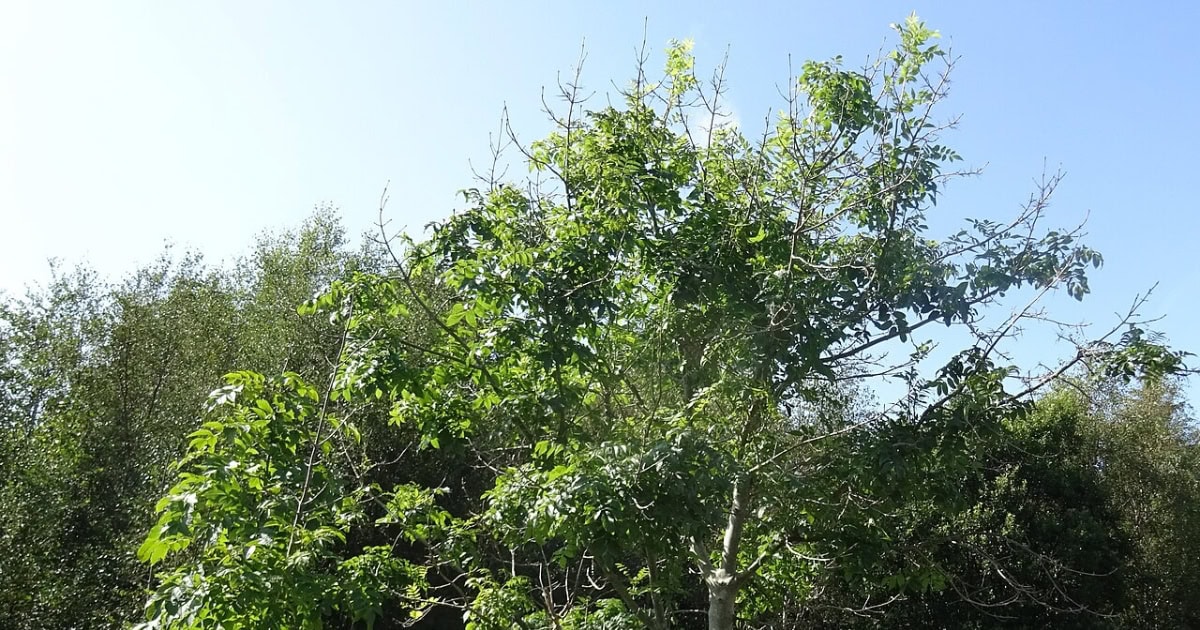

You do not need a ladder to spot the trouble. The most important signs of ash dieback sit where your boots get muddy: the first half-metre of trunk and the root flare. This guide shows you exactly what to look for at ground level, how to avoid ash dieback lookalike traps, and when to act to keep people and property safe.
In the North West we often find the worst collar infections after wet summers on clay soils, in shaded roadside belts and along access tracks where leaf litter piles against the base. On coastal corridors around the Mersey and Ribble, wind exposure and salt stress can tip a marginal tree over the edge. These local site factors matter because they influence where and how lesions develop at the stem base. Forest Research GOV.UK
A grounded vignette from a North West driveway
On a damp July morning near Altrincham a homeowner waved us down about a “bruise” at the foot of their ash. At the collar, a chocolate-brown, sunken patch wrapped about one third of the way round the stem. Under a small bark window the inner tissue was grey and lifeless, while a thin ribbon of live cambium tried to bridge the gap. The crown still looked fair. It was a classic collar lesion linked to ash dieback, a problem that can be dangerous even when the canopy above seems acceptable. Research confirms that collar necroses can establish at the base and progress independently of obvious crown dieback, especially on wetter sites. iforest.sisef.org BSPP Journals
Practical line: If you see a sunken, discoloured patch at the base of an ash, especially on a wet verge or clay bank, book a survey.
What does ash dieback look like at ground level?
Diamond lesions at nodes near the base. The pathogen Hymenoscyphus fraxineus moves from infected leaves down the shoots, creating dark, elongated diamond-shaped lesions where side shoots or small branches once attached. Near ground level, several diamonds can merge into a longer canker with sharp margins. Lift a naturally loose scale of bark: beneath a true lesion the inner bark is brown-grey rather than cream. These are hallmark signs recognised by national guidance. Forest Research Woodland Trust
Collar necroses and root-flare lesions. Look for sunken, discoloured patches at the base on the side that traps leaf litter. Fresh lesions feel taut and smooth; older ones crack and flake. As these lesions expand, they can girdle living tissue and weaken the stem right where the tree needs strength most. Studies across Europe have tracked the timing of collar lesions and the subsequent development of butt rot at the base. iforest.sisef.org
Bark discolouration and fissures. New lesions often have a sharp, clean edge that contrasts with surrounding bark. Old margins may be dry and fissured. If you notice sticky amber fluid, that usually points to a different problem; ash dieback lesions are normally dry.
Ash dieback lookalike checks. Strimmer or mower damage at the collar can mimic a lesion. Mechanical wounds have crisp edges and may expose bright sapwood. Frost cracks and old fire scars can also mislead. Photograph the area, note the position, and recheck after a week of changeable weather.
Two simple checks you can try at home
- Photo-compare. Compare a photograph of the crown from July this year with one from July last year. If the crown looks steady but the base lesion has expanded, suspect a primary collar problem rather than decline that started aloft. Research has documented collar lesions initiating while the canopy still appears serviceable. iforest.sisef.org
- Node-ring feel. Run a fingertip over the lower stem where last year’s side shoots were attached. Diamond lesions often centre on these node rings. Mark the spot and recheck after heavy rain. Authoritative identification guides describe this diamond pattern as a reliable sign. Forest Research
Practical line: If you see any of these signs above a pavement, play area or access track, book a survey.
Ash dieback symptoms around the base: early to late
Early stage. Small, sharply edged patches appear at the collar. The bark looks matt, slightly purple-brown, and may show hairline splits at the margins. Nearby buds may flush weakly, and the inner bark under a coin-sized window is brown-grey rather than pale. Public guides for owners describe these base-level signs along with the classic diamond-shaped lesions on shoots. Cornwall Council Woodland Trust
Transition. The tree responds with epicormic shoots below the lesion as it tries to route energy around the damaged section. The lesion edge firms up and begins to wrap further round the circumference. National agencies warn that collar infections can compromise structural integrity even when the canopy retains foliage. GOV.UK
Late stage. The lesion broadens and the base can develop a subtle “waist.” In many cases the weakened collar is later colonised by honey fungus species that accelerate butt rot. White mycelial fans beneath the bark and dark bootlace-like rhizomorphs in the soil are tell-tale signs of this follow-on problem. Evidence from long-term studies links collar lesions associated with ash dieback to subsequent development of basal decay. iforest.sisef.org
Ash dieback lookalike reminder. Honey fungus on its own can cause base rot, and it can also follow other damage. If you see fungal signs without clear diamond or collar lesions, you still need a professional inspection.
Practical line: If epicormic shoots pop up below a collar patch on a tree near a public right of way, book a survey.
Ash dieback disease stages: where collar infections fit
The journey starts in the leaves. Spores infect summer foliage, then the pathogen travels down the leaf stalks into shoots and the stem, creating the distinct diamond-shaped lesions. On wet, litter-rich sites the pathogen can also establish primary lesions at the base. That is why some trees with fair-looking crowns carry dangerous collar infections that you can only see from ground level. National and research sources describe both pathways, and they highlight the importance of site conditions such as moisture and shade. Forest Research BSPP Journals
The next chapter is often secondary decay. Investigations across affected regions report frequent colonisation of collar lesions by honey fungus species, which speeds up the loss of strength at the base. On saturated clay after a windy spell that can mean a sudden break at ground level or a heave of the root-plate beside a road or garden wall. iforest.sisef.org
Ash dieback lookalike context. A tree with a mower scar or an old frost crack can also fail at ground level, so a careful diagnosis matters even when ash dieback is suspected.
Practical line: If a basal lesion coincides with fungal brackets or white mycelium beneath the bark, book a survey.
Risk and decisions using a structured assessment (Tree Risk Assessment Qualification)
When we assess an ash with bark or collar lesions, we use the structured process taught by the International Society of Arboriculture’s Tree Risk Assessment Qualification. In plain English we consider three things:
- Likelihood of failure. Is the base compromised now, or trending that way given the lesion size and position?
- Likelihood of impact. Is there a target such as a pavement, a school route, a parked-car bay, a garden seating area or a busy access track?
- Consequences. If the tree fails at the base or the lower stem, what happens to people and property?
This common language helps us agree reasonable next steps with owners, from short-term barriers and re-routing footfall to pruning, staged removal, or retention with scheduled monitoring. It is a straightforward framework that turns worry into action. ISA Arbor
In the Greater Manchester area, we are seeing more ground-level failures after a sequence of wet weeks followed by wind, especially in roadside belts where verges stay waterlogged and leaf litter builds at the collar. A structured assessment keeps the focus on real-world targets and the actual defect rather than anxiety alone.
Ash dieback lookalike caution. Even if the cause proves to be a mechanical wound or another disease, the same risk method applies because the outcome at the base can be similar.
Practical line: If a collar lesion faces a carriageway, a bus stop or a school path, book a survey without delay.
Two brief North West cases
Case one — suburban driveway, Sale. A mature ash on heavy clay served as a screen to the road. The crown still carried around two thirds of its expected foliage. A collar lesion wrapped roughly two hundred and seventy degrees around the road-facing side; there were no fungal brackets yet, but the inner bark was necrotic. Decision: immediate measures to reduce target occupancy (temporary barriers and parking changes), followed by sectional removal under traffic management. Reason: high likelihood of base failure with vehicles and pedestrians as constant targets.
Case two — farm track near Ormskirk. A shelterbelt ash beside a lightly used access track. A one-hundred-and-twenty-degree lesion on the lee side; a simple July-to-July photo-compare showed crown thinning. No honey fungus at inspection, and drainage improvements were easy to make. Decision: retain with a light reduction to reduce wind loading and schedule a six-month re-inspection before autumn gales.
Practical line: If you choose retention, write down a re-inspection date and stick to it.
Five-minute ground-level check you can do safely
- Walk the base slowly. Look for sunken, discoloured patches on the collar and root flare.
- Gently lift any naturally loose bark scales. Do not cut bark. Check the colour beneath: brown-grey suggests a lesion.
- Feel for last year’s node rings on the lower stem. Diamond lesions often centre on those points.
- Compare a July crown photo from this year with last July. Note any change and whether the base looks worse despite a steady crown.
- Note the nearest target: a path, a play area, a parked car bay, an access track or a road.
These simple steps mirror the signs and patterns described in national and research guidance for ash dieback. Forest Research GOV.UK iforest.sisef.org
Practical line: If your quick check raises a concern near people or traffic, book a survey.
Pros and cons of keeping an ash with a basal lesion
Pros
- Retains amenity and habitat value, especially in belts and gardens where removal would leave a hard gap.
- Buys time to see whether the crown stabilises, and to plan a staged response.
- Preserves potential genetic tolerance where risk can be managed.
Cons
- Uncertainty remains, especially on wet clay soils where decay can advance quickly.
- Ground-level failure can be sudden and severe.
- Ongoing inspection and any target management carry cost.
- Near roads, schools and public rights of way, removal may still be the sensible choice.
This balance aligns with national owner guidance: identify, assess, then choose works that match the actual risk, not a headline. GOV.UK
Practical line: If retention is chosen beside a public right of way, agree a written monitoring plan.
Frequently asked questions
Does ash dieback always start in the crown?
No. On wet, litter-rich sites a primary collar lesion can appear even when the crown looks fair, which is why ground-level checks are essential. BSPP Journals
What is an “ash dieback lookalike” at the base?
Mechanical strimmer scars, frost cracks and old fire wounds can mimic lesions. A professional can distinguish these by edge character, tissue colour beneath the bark and lesion geometry. Forest Research
How quickly can a collar lesion become dangerous?
Progress varies with moisture, soil and exposure. Research shows that collar necroses are frequently followed by basal decay, which can hasten structural weakening at ground level. iforest.sisef.org
Can I keep an ash with a small collar lesion?
Sometimes, yes. Where targets are low and the defect is contained, retention with monitoring can be reasonable. Decisions should follow a structured Tree Risk Assessment Qualification process. ISA Arbor
Do I need permission for works?
Some trees are protected by a Tree Preservation Order, and works in Conservation Areas also have rules. Certain felling volumes may require a felling licence. We can guide you through permissions and liaise with your local authority. GOV.UK
TL;DR
- Look low. Sunken, dark patches at the base or diamond-shaped lesions near node rings are key signs.
- Wet sites and clay soils increase collar-infection risk, and honey fungus often follows.
- Do two quick checks: compare July photos year-on-year and feel for node-centred diamond lesions.
- If any of this sits over a path, play area, roadside belt or access track, book a survey. Forest Research iforest.sisef.org
Call to action for North West tree owners
If you are in Greater Manchester, Merseyside, Lancashire, Cheshire or the North Wales borders and have spotted diamond lesions or a sunken collar patch, we can help. We will carry out a ground-level assessment using the Tree Risk Assessment Qualification method, agree sensible risk measures, and, if needed, handle permissions with your local authority. Use the contact form on our website to request a site visit, or call the number at the top of this page to speak with our consulting arborist team today. ISA Arbor
Sources and further reading
- Forest Research: “Ash dieback (Hymenoscyphus fraxineus)” — symptoms, including diamond lesions, and owner guidance. Forest Research
- Government guidance for England: “Managing ash dieback in England” — identification, safety and management for owners and managers; updated January 2025. GOV.UK
- Enderle, Sander and Metzler (2017), iForest: “Temporal development of collar necroses and butt rot in association with ash dieback.” Evidence on collar lesions and basal decay. iforest.sisef.org
- Marçais and colleagues (2016), Plant Pathology: “Influence of site and stand factors…” — site conditions influencing basal lesions and the role of honey fungus. BSPP Journals
- International Society of Arboriculture: Tree Risk Assessment Qualification — the structured method we use to frame decisions with owners. ISA Arbor
Short disclaimer (England): Works to protected trees or trees in Conservation Areas may require consent before pruning or removal. Some felling requires a felling licence. We can advise and handle applications on your behalf. Government guidance is available for owners who need to check their responsibilities. GOV.UK
Book in your tree survey today
Get clear, professional advice from qualified tree surveyors you can trust. Whether you need a report for planning, insurance, mortgages or safety, we’ll deliver accurate results fast.