
Ash dieback identification and diagnosis: what to sample and when
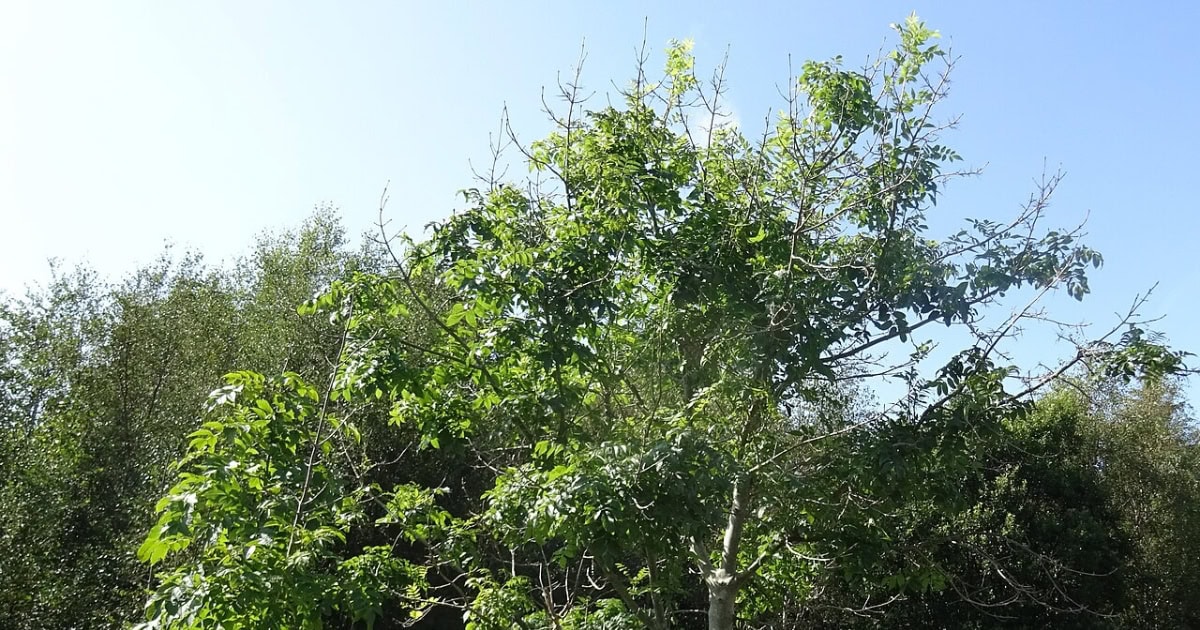

Ash dieback in one line. Ash dieback is caused by the fungus Hymenoscyphus fraxineus. It blackens leaves and shoots in summer, creates diamond-shaped bark lesions, thins the crown and, over time, can leave wood brittle and hazardous (Forest Research, 2025). Forest Research
Why this matters now. You want two things: to recognise the disease on your tree, and to know exactly what evidence to send — photos or samples — so a diagnosis stands up. You will get both here, in plain English, with North West realities in mind.
A quick story from the road. Last July in Sale, after a run of wet days, we stood beneath a boundary ash. The sky showed through a thin upper crown. Mid-canopy shoots carried blackened leaf stalks that snapped with a tap. At last year’s leaf nodes, we found small diamond lesions. Clear photographs plus a short section of symptomatic shoot made the diagnosis simple — and the risk decision clearer.
What ash dieback looks like (symptoms owners can spot)
Leaves and shoots (mid to late summer). July to September is the best window to check foliage. Look for olive to blackened leaflets and shoot tips that flag and die back. Crucially, the ash leaf stalk (rachis) often blackens where it meets last year’s wood (Forest Research; Woodland Trust). Forest ResearchWoodland Trust
Bark and lesions. Where a leaf joined a twig in the previous year, elongated diamond-shaped lesions can form. Under the lesion, the inner bark tends to look brownish-grey rather than healthy cream-pink (Woodland Trust; Forest Research). Woodland TrustForest Research
Crown change. The upper crown grows sparse; lower on the trunk and primary limbs you may see tufts of new shoots (epicormic growth) — a stress response rather than recovery (Woodland Trust). Woodland Trust
Basal and collar lesions. Some trees develop dark patches lower on the stem or at the base, even when the canopy looks modestly affected. These can weaken the trunk and change the risk picture (Forest Research; Tree Council). Forest ResearchThe Tree Council
Ash dieback lookalike. Late-season colour change or drought scorch can mimic leaf blackening; use the July–September window and look specifically for diamond lesions at last year’s nodes to separate them (Forest Research). Forest Research
Do this if you see it. If the tree overhangs a play area, book a survey.
Ash dieback disease stages owners can recognise
- Early summer flagging. A few wilted, blackening shoots after warm, wet spells.
- Lesions at nodes. Sunken, often diamond-shaped lesions where last year’s leaves attached; twig death follows.
- Crown thinning. Upper crown transparency with fresh tufted shoots lower down.
- Basal involvement. Dark collar or basal lesions even where canopy looks “not too bad.”
- Structural decline. Brittle deadwood and weakened unions, especially after dry periods followed by wind.
Timing note. Summer is best for foliage and shoot symptoms. Winter is useful for spotting bark and basal lesions and for inspecting deadwood structure (Forest Research). Forest Research
Ash dieback lookalike. Spring frost can kill tips too, but lacks the classic mid-summer rachis blackening and diamond lesions. Action: if you see progressive change year-on-year, book a survey.
What to sample and when: TreeAlert versus laboratory submission
When photographs are enough. In Great Britain, Forest Research confirms that clear, detailed photographs can now be sufficient to confirm ash dieback — without molecular diagnostics — when symptoms are typical. Your report is triaged by the Tree Health Diagnostic and Advisory Service; they will either diagnose from your evidence, ask for more, or request a sample (Forest Research: TreeAlert and the Tree Health Diagnostic and Advisory Service). Forest Research
When to seek a laboratory test. Choose a laboratory confirmation when signs are atypical, when you need documented evidence for works or insurance, or where the site is sensitive (roadside belts, schools, rail edges, riverside embankments). Private laboratories, including the Bartlett Research and Diagnostic Laboratory, accept plant samples for diagnostic testing and advisory reporting. Use TreeAlert as well to support national surveillance (TreeAlert; Bartlett). Forest Researchnpdn.org
What to collect (practical owner-level sampling).
- Summer (July–September): 10–20 cm shoots with leaves attached showing blackening or wilting; include the leaf stalk (rachis) where it meets last year’s wood.
- Any season: A 15–20 cm twig section that spans a lesion margin — half healthy, half affected — so pathologists can examine the live-to-dead interface.
- If leaf fall is the problem: Include a small handful of fallen ash leaves and short twigs still carrying symptomatic leaves.
These principles align with Forest Research’s sample guidance. Forest Research
How to photograph for TreeAlert (so it can be confirmed).
- One whole-tree image showing crown transparency.
- Close-ups of shoots and any diamond-shaped lesions, with a coin or ruler for scale.
- Note site context (road, public right of way, play area, watercourse) and exposure (coastal wind, valley funnel) — this helps triage.
TreeAlert requires clear photographs and explains what happens after you submit (Forest Research). Forest Research
Packaging and posting checklist (UK-aligned).
- Try not to sample in rain; if wet, wrap in kitchen towel.
- Separate foliage, woody material and any hard fungal parts in sealed polythene bags.
- Include the lesion interface and send early in the week; keep cool, not wet.
- Include contact details, a simple site map, and brief history (storm dates, pruning dates).
(From Forest Research’s packaging guidance.) Forest Research
Ash dieback lookalike. Honey fungus and mechanical damage cause bark discolouration too; that is why the interface sample matters. Action: if this is over a driveway or access track, book a survey.
Risk and next actions (when to book a Tree Risk Assessment Qualification inspection)
Move from “identify” to “assess” when: the upper crown is sparse, deadwood forms over targets (roads, gardens, play areas), or basal lesions are present.
Ask for an inspection by a consultant with the Tree Risk Assessment Qualification. This credential trains assessors to follow a standard, systematic method so the likelihood of failure and the consequences are documented and defensible (International Society of Arboriculture). ISA Arbor
Retain and monitor — or prune and fell? (pros and cons)
- Retain & monitor: keeps amenity and habitat, preserves potentially tolerant trees; needs scheduled re-checks and management zones.
- Prune or fell: removes hazard near targets; may be required by site use; licensing and constraints (felling licences, tree preservation orders, conservation areas) still apply (GOV.UK). GOV.UK
Action: if brittle deadwood is above a public right of way, arrange a Tree Risk Assessment Qualification inspection.
Two simple checks you can try today
- Photo comparison. Compare photos from the last two summers from the same angle. Look for increasing upper-crown transparency and short, blackened shoots.
- Node lesion check. On last year’s twigs, look for diamond-shaped lesions at former leaf nodes. Gently scrape a small window: healthy inner bark is cream-pink; affected inner bark trends brownish-grey. (Compare against the symptom descriptions from Forest Research and Woodland Trust.) Forest ResearchWoodland Trust
Action: if either check rings true over a play area, book a survey.
North West notes (Manchester and surrounds) + a short case
What we see locally.
In the North West we often find wet summers extend the infection window on sheltered belts. Around Manchester, clay soils sit wet in winter and shrink in summer, adding stress that shows up as quicker crown thinning. Roadside belts along the M60, A6 and A56 funnel wind that snaps brittle deadwood onto verges. On the coast — Wirral, Sefton, Fylde — salt-laden winds can mask or intensify leaf symptoms; photographs across July to September help you calibrate.
Mini-case (anonymised).
Bolton, lane edge, clay subsoil, open exposure. Mature boundary ash over a bridleway. Summer photos showed tip dieback and lesions at last year’s nodes; basal staining present. We reported via TreeAlert, then carried out a Tree Risk Assessment Qualification inspection. Outcome: phased crown reduction away from the path, future habitat retention as a safe monolith, yearly re-inspection aligned to bridleway use (Forest Research explains the TreeAlert triage and when samples are requested). Forest Research
Action: if a declining ash leans toward a pavement or cycle route, arrange a survey.
TL;DR (owner cheat-sheet)
- Best time to spot it: July–September for foliage; winter for bark and basal lesions (Forest Research). Forest Research
- Reporting: Use TreeAlert; many typical cases can be confirmed from clear photographs (Forest Research). Forest Research
- Laboratory testing: Use a private laboratory when signs are atypical or you need evidence for works (Bartlett; use TreeAlert as well). npdn.org
- Sampling: Send symptomatic shoots and a twig that spans a lesion margin; pack dry, cool and post early in the week (Forest Research). Forest Research
- Safety first: When risks are present, ask for a Tree Risk Assessment Qualification inspection; licensing and constraints still apply (ISA; GOV.UK). ISA ArborGOV.UK
FAQs
How dangerous is a declining ash?
Brittle deadwood and lesion-weakened unions elevate the chance of branch failure, particularly near roads, gardens and paths. A Tree Risk Assessment Qualification inspection gives a structured, documented decision (ISA). ISA Arbor
When should I use TreeAlert versus a laboratory?
Report via TreeAlert when symptoms are typical — clear photographs can be enough. Seek a laboratory test when the signs are atypical or you need evidence for management or insurance (Forest Research; Bartlett). Forest Researchnpdn.org
Do I need to fell an infected ash?
Not automatically. Many trees can be managed by pruning and monitoring where risk is acceptable. Felling usually requires a licence unless a tree is dead or poses a real and immediate danger; tree preservation orders and conservation areas add controls (GOV.UK). GOV.UK
What does a good sample look like?
Short shoots with blackened leaves attached and a twig including a lesion interface; pack materials separately, keep cool and post early in the week (Forest Research sample guidance). Forest Research
Is there any hope for ash?
Yes. A small proportion show genetic tolerance; current research highlights the role of genetics and individual tree vitality in lower susceptibility (peer-reviewed; 2025). Retain safe, promising trees where possible and monitor them. MDPI
Clear, natural call to action
Need an experienced eye on a specific tree? We survey ash across Greater Manchester, Cheshire, Merseyside and Lancashire. If your ash overhangs a road, play area or public path, we can carry out a Tree Risk Assessment Qualification inspection and, if needed, organise evidence collection and laboratory submission.
Call or message us to book a visit.
Sources (selected)
- Forest Research — Ash dieback overview, symptoms, best survey timing, management and reporting. Forest Research
- Forest Research — TreeAlert and Tree Health Diagnostic and Advisory Service (confirmation from photographs; sampling and packaging guidance). Forest Research+1
- Woodland Trust — symptom details including diamond-shaped lesions and inner bark colour. Woodland Trust
- GOV.UK — managing ash dieback in England; licensing and constraints. GOV.UK
- Bartlett Research and Diagnostic Laboratory — private laboratory diagnostic pathway. npdn.org
- MDPI (2025) — current research on susceptibility and tolerance. MDPI
UK compliance note (plain English)
Works on protected trees still need permission. Felling licences are normally required unless trees are dead or present a real and immediate danger; tree preservation orders and conservation areas add separate controls. Check with your local authority before committing to work (GOV.UK). This page is guidance, not legal advice. GOV.UK
Book in your tree survey today
Get clear, professional advice from qualified tree surveyors you can trust. Whether you need a report for planning, insurance, mortgages or safety, we’ll deliver accurate results fast.