
Ash Dieback Woodland Management: Retain, Restructure or Restock

Managing Ash in Woodlands (Silviculture): Woodland objectives first — retain, restructure, or restock
Definition: Ash dieback is a fungal disease of ash caused by Hymenoscyphus fraxineus. It spreads by wind-borne spores, causes leaf wilting, shoot lesions and crown decline, and is now widespread across England. (GOV.UK; Forest Research). GOV.UK+1
Ash dieback is everywhere now. You can see it from the M60 and on canal towpaths: thin crowns, dead tips, brittle limbs. The question in front of every owner isn’t “Is it here?”—it’s “What’s the right woodland objective: retain, restructure, or restock?”
We’ll help you decide that, using North West realities—wet summers, heavy clay, coastal exposure on the Fylde and Mersey, and public rights of way that slice through many private woods. Our goal: a plan that keeps people safe, keeps value in your woodland, and keeps future options open. (GOV.UK 2025; FC Ops 46/46b). GOV.UK+2GOV.UK+2
Setting woodland objectives in the North West
Start with your map: where are the tracks, rides and PRoW? Which edges meet roads or rail? What’s the soil—sticky clay that holds water in August, or free-draining glacial sand? Disease severity tracks humidity and inoculum load; stands rich in ash tend to decline faster, while isolated trees in airy settings can limp on for years. Prioritise safety corridors first; then decide which compartments you can retain, where to restructure, and which to restock. (GOV.UK; FC blog). GOV.UK+1
If your ash lines a footpath or play area, book a survey.
Ash dieback symptoms — what does it look like?
We’re seeing three reliable signposts.
Crown and leaf signs. In mid to late summer, look for early leaf wilt, blackening along the midrib, and thinning in the upper crown. Younger trees often crash faster. (Forest Research; Woodland Trust). Forest Research+1
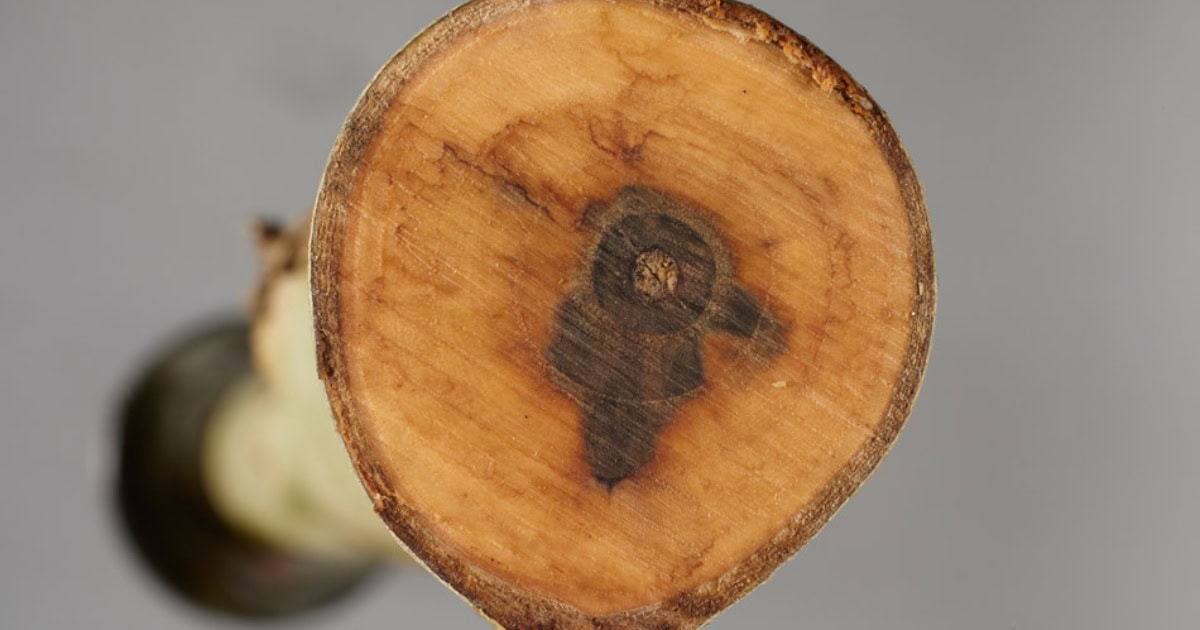
Shoots and lesions. Find last year’s growth nodes and check for diamond-shaped lesions around leaf scars; peel back a fingertip of bark—brownish-grey discolouration beneath is telling. Twigs die back, and the tree throws epicormic shoots lower down. (Forest Research picture manual; RHS). Forest Research+1
“Ash dieback lookalike.” Drought stress, ash sawfly defoliation, honey fungus and old frost damage can mimic parts of the picture. Always match multiple signs and track changes over two summers. (Tree Council guide). treecouncil.org.uk
Two simple checks this week (owner-verifiable):
- Compare full-crown photos from the last two July/Augusts—look for thinning at the top and back-budding lower on the stem. (Forest Research images). Forest Research
- On a 2–5 cm shoot, look for diamond lesions at last year’s nodes; lightly lift bark to confirm discoloured sapwood beneath. (RHS/WT). RHS+1
If you confirm lesions on trees over parking or play, book a survey.
RETAIN — keep ash where safe and useful
Not every ash is doomed. Research in 2025 shows young, naturally regenerated ash are evolving greater resistance. That’s a big management signal: if a tree looks healthier than its neighbours and is in a low-risk spot, keep it and its genetics. (QMUL/Kew, 2025; GOV.UK). PubMed+2kew.org+2
Pros
- Keeps local genetics that may carry tolerance traits.
- Maintains canopy and deadwood habitat.
- Lower immediate cost than wholesale removal. (GOV.UK; AA guidance). GOV.UK+1
Cons
- Monitoring burden rises; embrittlement risk increases as decline advances. (FISA; Tree Council). ukfisa.com+1
Grounded vignette (drive/garden, anonymised):
South Manchester, semi-mature ash over a shared drive. Crown thinned but one stem remained vigorous with minimal lesioning. We pruned for clearance, set a 12-month inspection cycle, and retained the tree—kept shade, kept privacy, kept options. (Arboricultural Association risk approach). Arboricultural Association
If a retained ash overhangs a drive, schedule annual inspections.
RESTRUCTURE — thin, phase change, make it safe
In the North West we often find roadside belts and canal margins where ash dominates. Here, restructure early: thin out the most affected, keep the better crowns, and open safe corridors along PRoW. Diseased ash can be unpredictable; plan work windows, traffic management and extraction routes that avoid soft ground after wet summers. (GOV.UK Ops 46a; FISA safety). GOV.UK+1
Mini-case (Greater Manchester, 7-ha block):
Clay over sandstone, permissive path and a public footpath. Hazard trees above the PRoW were felled under licence; we thinned to favour healthier ash and non-ash associates, widened rides for airflow, and stacked deadwood away from paths. Result: lower risk, better structure, natural regen already on the rides after two seasons. (FC guidance; NTSG for risk framing). GOV.UK+1
If a PRoW runs under declining ash, prioritise that corridor first.
RESTOCK — diversify with species suited to ash sites
Where compartments are collapsing, restock. On many ash soils in Lancashire/Cheshire, mix species by soil moisture and exposure:
- Moist clays (poorly drained): alder, small-leaved lime, hornbeam, field maple; consider birch as a nurse.
- Freer-draining or calcareous: sycamore (where appropriate), small-leaved lime, wild service, cherry; oak where site permits.
- Coastal exposure: downy birch, rowan, Scot’s pine as a nurse in belts, with broadleaf mix behind.
The aim is diverse, climate-resilient structure (no mono-solutions). FC Ops 46b gives species lists and principles; check local provenance and deer pressure. (FC 46b; GOV.UK 2025). GOV.UK Assets+1
If planting >0.5 ha, request a restock plan tied to soil and access.
Costs, permissions and timing (North West realities)
- Permissions: Felling usually needs a felling licence unless trees are dead or pose real and immediate danger; TPOs and conservation areas still apply. (GOV.UK 2025). GOV.UK
- Safety & access: Diseased ash is higher-risk to work on (embrittlement/snap). Use competent, insured contractors; plan traffic management for roadside belts. (FISA; AA). ukfisa.com+1
- Indicative local costs (guide only):
- Woodland safety survey & plan: £450–£1,200 depending on size/complexity.
- Selective felling near PRoW/roads: £400–£900 per tree where traffic management/climbing is needed; mechanised thinning in-wood is lower per-stem.
- Restocking & aftercare (mixed broadleaf): £2,500–£6,000/ha including guards and beats-up in year 2.
Prices move with access (soft ground, banks), traffic control, and disposal/haulage.
If works touch a highway, factor traffic management lead-times into your plan.
TL;DR
- Start with objectives: retain tolerant trees where safe; restructure safety corridors; restock collapsing stands with a mixed, resilient palette.
- Use simple checks: photo-compare two summers; look for diamond lesions at nodes.
- North West reality: wet summers and clay soils increase access risk; coastal belts need tougher mixes; PRoW and roads drive priority.
- Act legally & safely: check licences/TPOs; use competent contractors; plan traffic.
- Keep options: retaining the right ash helps future genetics. (Kew/QMUL 2025; GOV.UK). kew.org+1
References (selected)
Forest Research; GOV.UK/Forestry Commission (Ops 46/46b, 2025 update); Arboricultural Association; Tree Council; Kew/QMUL (2025). PubMed+6Forest Research+6GOV.UK+6
CTA — Tree Surveys North West
Need a clear, lawful plan for your ash? Book a woodland ash assessment across Greater Manchester, Merseyside, Lancashire and Cheshire. We’ll map retain/restructure/restock, cost the works, and handle permissions. Message us via the contact page and we’ll get dates in the diary.
Book in your tree survey today
Get clear, professional advice from qualified tree surveyors you can trust. Whether you need a report for planning, insurance, mortgages or safety, we’ll deliver accurate results fast.